Jul 18, 2026
Rush Flutter to Native Speed — with Rust
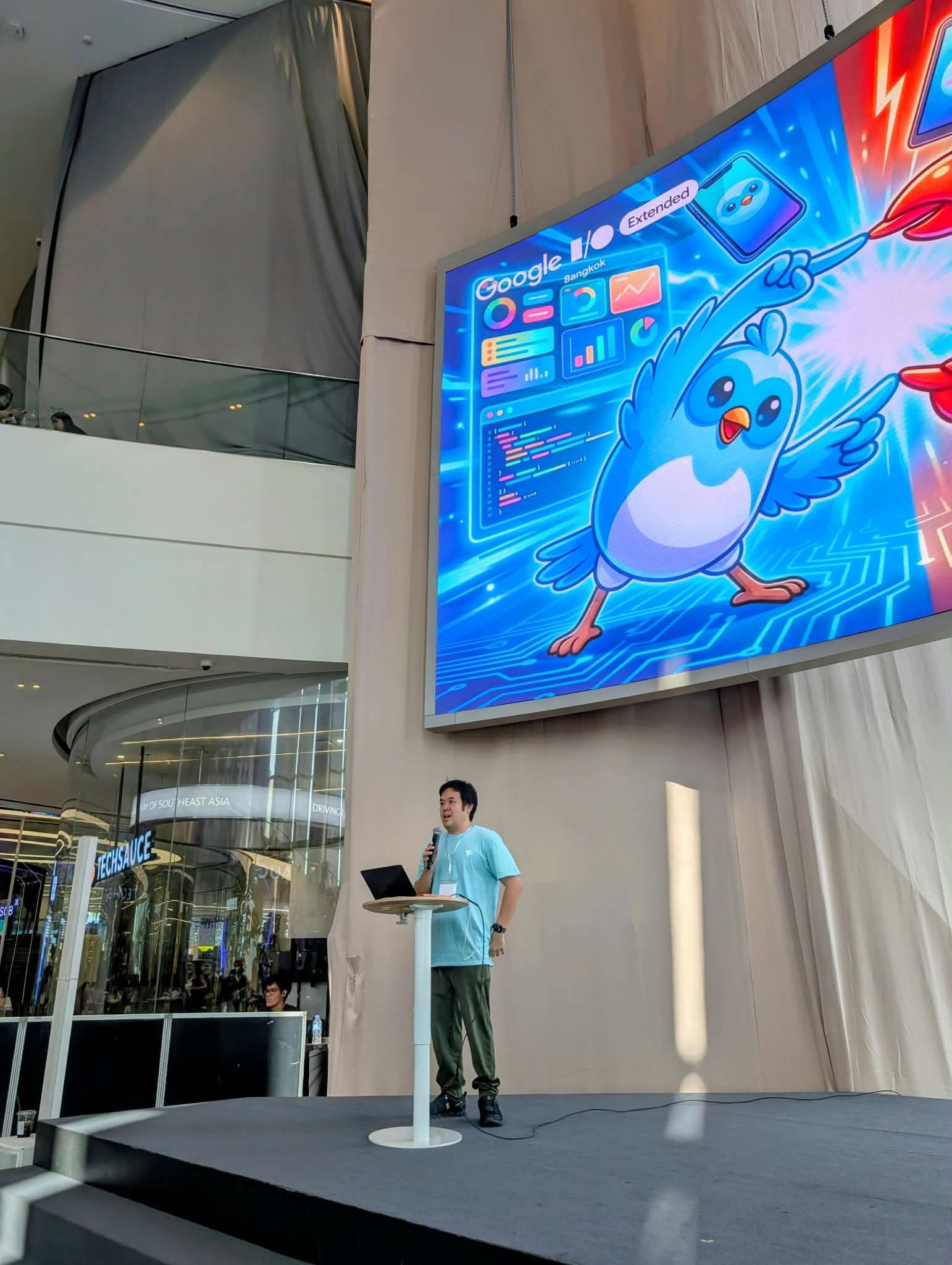
Pushing Flutter toward native speed with Rust FFI. A Google I/O Bangkok session on using Rust for the performance-critical paths a Flutter UI cannot reach on its own.
View Slides →Amorn Apichattanakul
I build privacy-first AI that runs directly on device — LiteRT inference, local LLMs, on-device RAG, and biometrics. Right now: face liveness eKYC in a financial super-app serving 4M+ users.
Staff Mobile Engineer at KBTG · Flutter GDE · Deep learning since 2018

16 years hands-on IC
Flutter · iOS (Swift) · Android (Kotlin)
Platform Channels · Rust FFI
Staff Mobile Engineer @ KBTG
Deep Learning since 2018 · Stanford/Coursera ↗
LiteRT · LiteRT-LM (Gemma) · Gemini Nano
On-Device RAG · Vision + LLM Pipelines
Claude Certified Architect · verify ↗
Since 2019 at KBTG
Face liveness eKYC · 4M+ users
Security · compliance · zero downtime
Flutter GDE · Dec 2022
Regulated eKYC onboarding demands real-time face liveness — confirming a real human, not a photo, video, or mask — running entirely on-device with zero network latency. Once liveness passes, the verified frame is sent for server-side face comparison against the ID photo. Since 2022, I've led the integration and ongoing optimization of LiteRT face liveness: architecting iOS/Android bridges via platform channels, tuning inference across device variance, and coordinating across data science, mobile, and security teams.
Result: production on-device liveness detection running across millions of daily authentications. I published the high-performance Flutter approach behind it (read on Medium) — other banks have since adopted it in their own apps.
A financial app serving millions needed enterprise-grade performance under strict transaction security and volatile network conditions across diverse devices. I architected and implemented a high-performance optimistic-loading pipeline — executing flows instantly while resilient fallback callbacks catch transactional anomalies and securely enforce safety policies (logging the user out on critical mismatches). I also optimized the native biometric security loops by eliminating redundant platform-channel context handshakes.
Result: the fastest biometric login speed in the financial industry, with a flawless compliance record and zero security breaches.
Scaling mobile architecture across 60+ engineers within a 3,000-person tech organization while staying hands-on in the codebase. As Staff Mobile Engineer and Head of the Mobile Guild, I lead through code: authoring the reference Flutter-Native Add-to-App bridges, defining Clean Architecture and security standards, and owning the CI/CD and observability pipelines (Firebase, Analytics) that keep a 4M+ user super-app moving fast safely.
Result: unified engineering standards across teams, reduced technical debt, and a "Zero Downtime" rollout strategy that absorbed major platform shifts (e.g., Apple Privacy Manifests) without service interruption.
What I'm building and benchmarking right now — pushing on-device intelligence further for mobile apps that can't compromise on privacy or latency.
Building fully local Retrieval-Augmented Generation (RAG) pipelines in Flutter — on-device embeddings, local vector search, and context retrieval for small language models (Gemma / Gemini Nano) with zero cloud round-trips. Next up: fine-tuning lightweight open models for domain-specific mobile tasks.
Wiring fast ~120ms LiteRT detectors (EfficientDet & BlazePose in background isolates) to slow-reasoning local LLMs (Gemma 4 E2B via LiteRT-LM function calling) — turning live camera signals into autonomous offline actions in airplane mode.
Streaming adaptive widgets dynamically from AI agents in Flutter instead of static screens, while offloading compute-heavy image and data bottlenecks to native speed via Rust FFI.
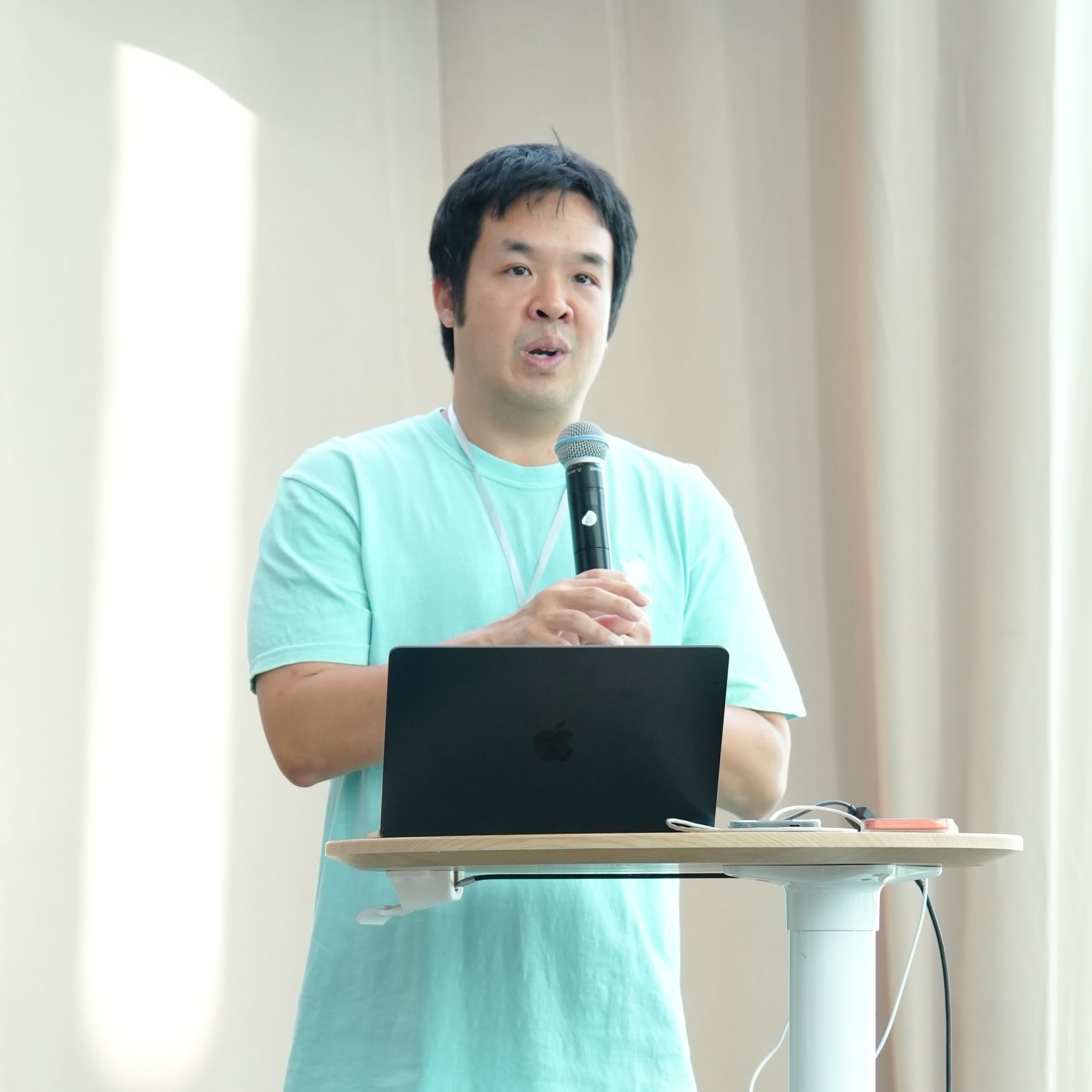
I've been a hands-on mobile engineer for 16 years, since the iPhone 3GS. I began studying deep learning in 2018 (Deep Learning Specialization, Stanford/Coursera) — well before the on-device AI wave. And since 2019 I've built inside the hardest proving ground I could find: financial banking at KBTG, where I've deliberately stayed on the Staff individual contributor (IC) track — writing production code every day while guiding technical architecture for 60+ mobile engineers in a 3,000-person tech organization. Those three tracks now converge in production: LiteRT face liveness eKYC serving 4M+ users.
My work sits where mobile, on-device AI, and banking meet — not as a job pivot, but as a deliberate, multi-year craft. As a Staff IC, I lead by building the hardest pieces first — native bridges, edge inference pipelines, and performance benchmarks — and turning what works into the architectural standard. Three principles guide that work:
This is the work I've been quietly preparing for. If it intersects with what you're building, I'm always up for a conversation.
On-device AI is easy to demo and hard to ship. Banking is where the constraints are real.
On-device LiteRT face liveness confirms a real human — not a photo, video, or mask — entirely on-device, with zero network round-trips during detection. Only after liveness passes does the verified frame go to the server for face comparison against the ID photo.
I designed a high-performance Flutter eKYC approach and published it — other banks have since adopted it in their own apps.
How I built it — Medium ↗Anomaly-triggered enforcement policies, zero security breaches, and a flawless compliance record at 4M+ user scale.
A zero-downtime strategy that absorbed major platform shifts (Privacy Manifests, OS updates) — governed for 60+ engineers.
Disseminating production-scale mobile and AI engineering insights to the global developer community.
Fast predictive vision models (~120ms/frame EfficientDet in an isolate) and local LLMs (Gemma 4 E2B via LiteRT-LM function calling) working together on-device — turning live camera signals into meaning and action in airplane mode, with zero cloud round-trips.
Jul 18, 2026
Pushing Flutter toward native speed with Rust FFI. A Google I/O Bangkok session on using Rust for the performance-critical paths a Flutter UI cannot reach on its own.
View Slides →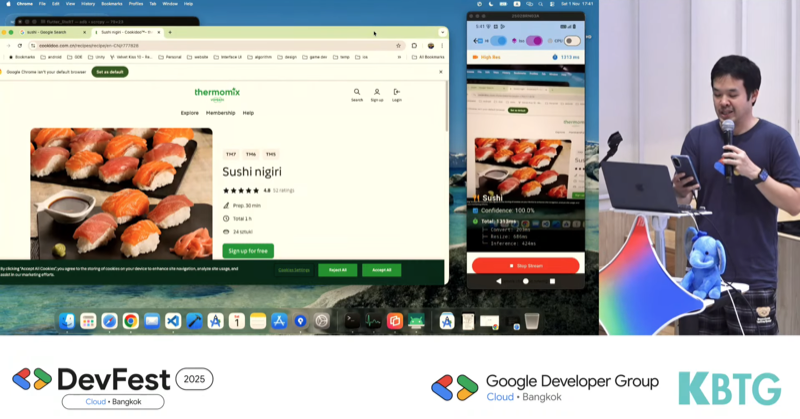
Nov 1, 2025
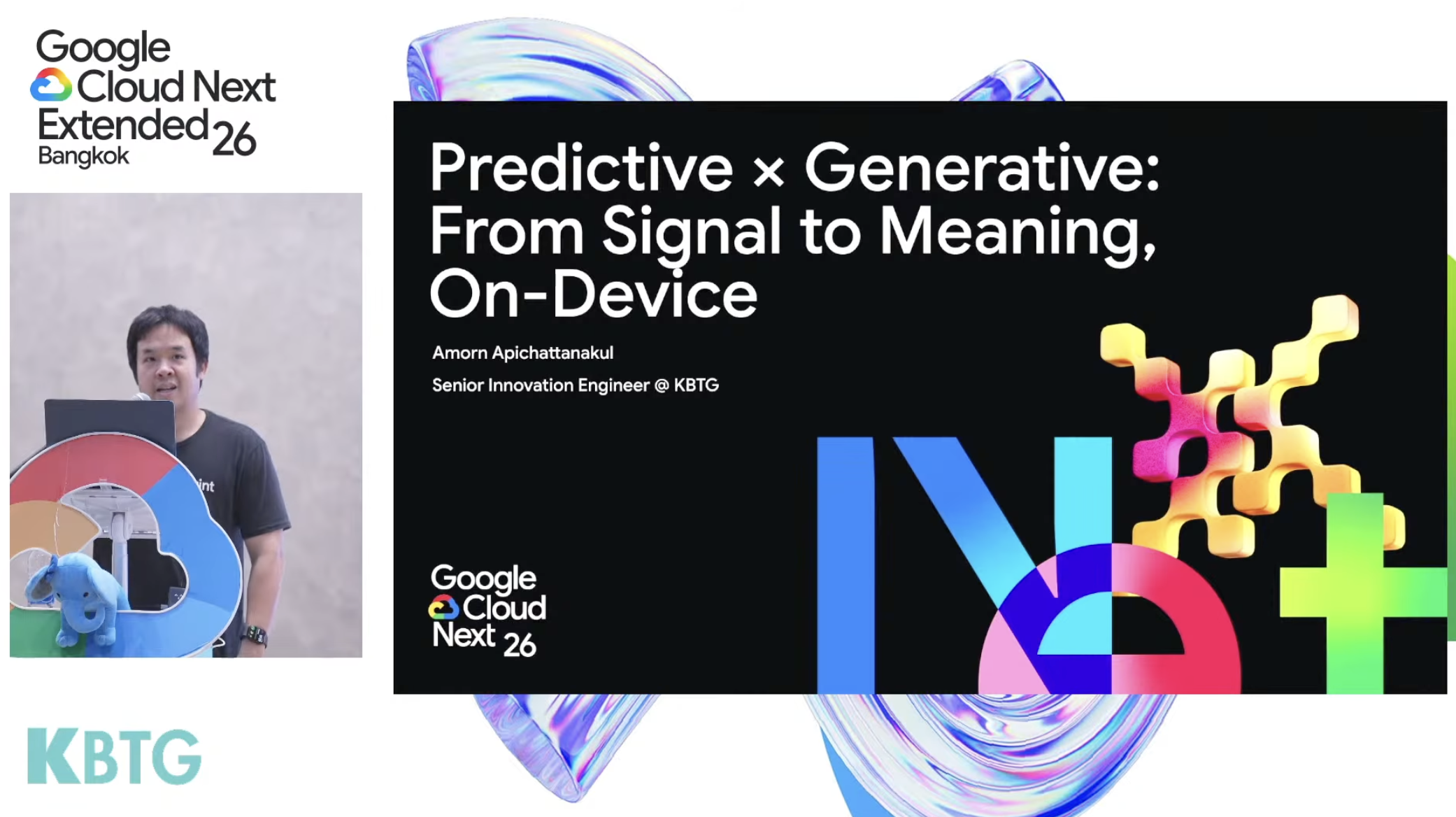
Exploring on-device AI as a complement to cloud AI — practical mobile implementation using LiteRT (TensorFlow Lite) for low-latency, privacy-preserving features.
View Slides → Watch on YouTube →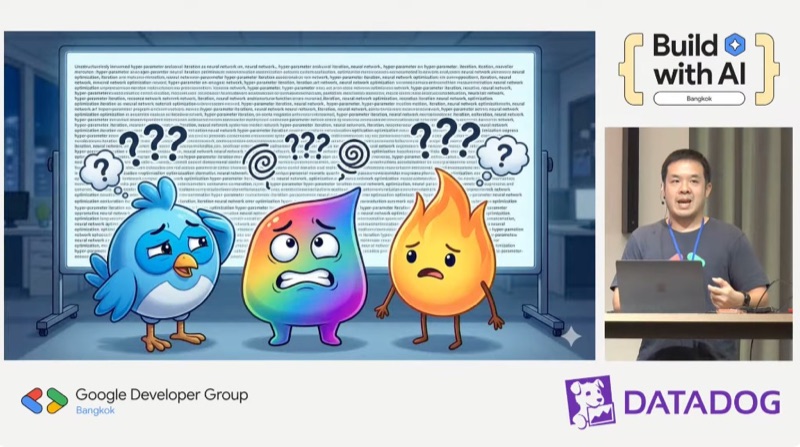
Feb 18, 2026
Exploring Agent-to-UI (A2UI) architectures using dynamic Generative UI (GenUI) in Flutter. AI agents that stream, construct, and render customized UI widgets in real-time.
View Slides → Watch on YouTube →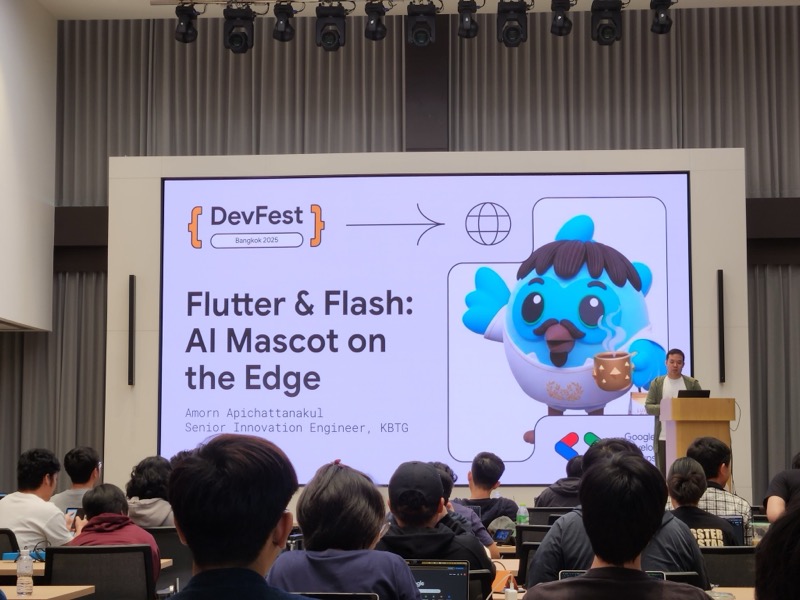
Nov 23, 2025
On-device AI using Gemini Nano to create an AI-powered mascot on edge devices. Flutter integration with on-device AI for personalized experiences without server dependencies.
View Slides →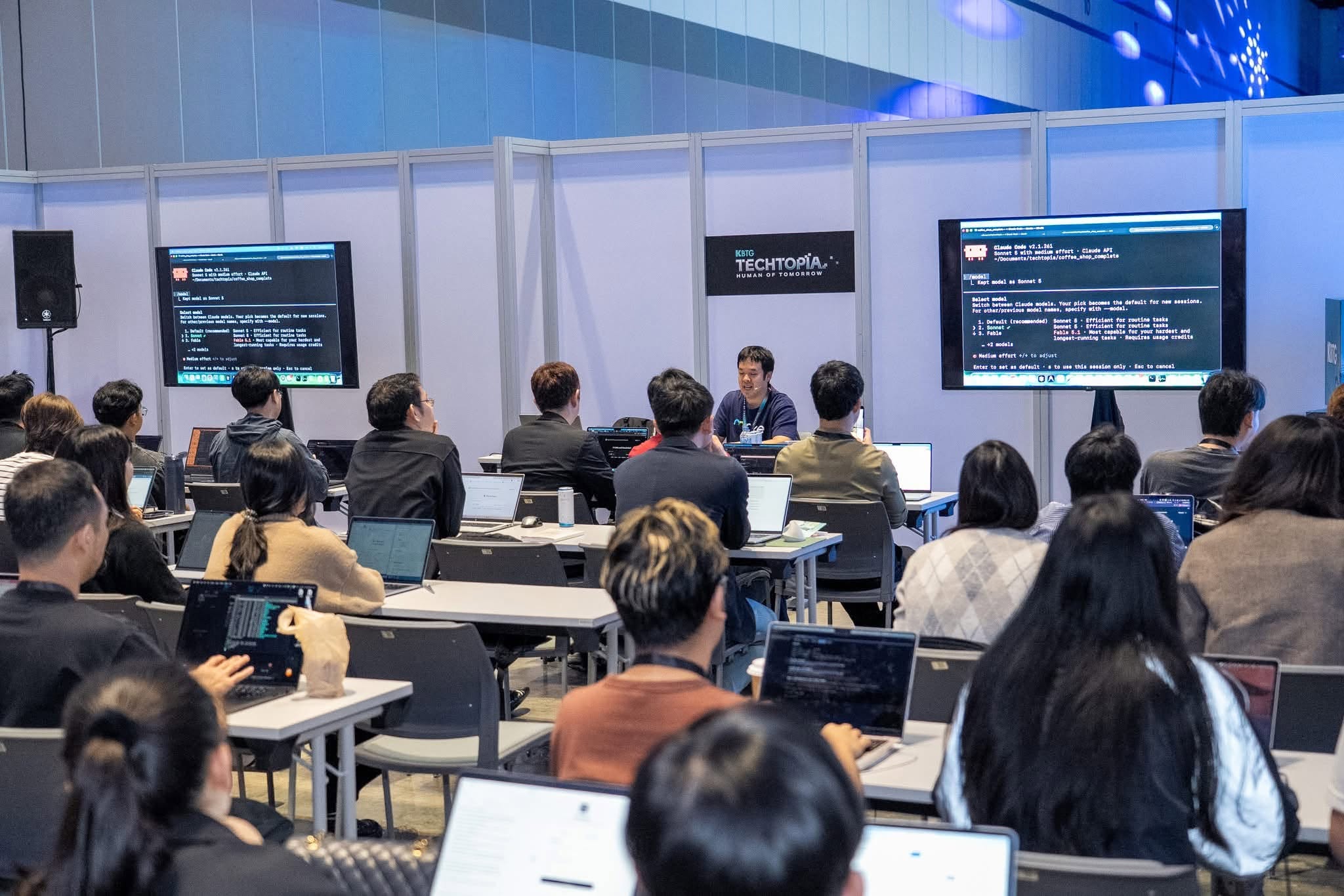
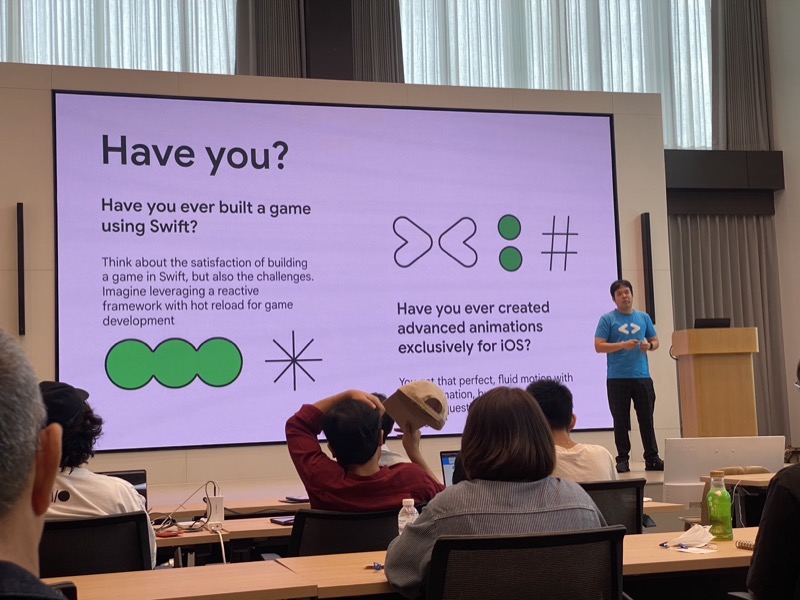
Sep 16, 2026
A hands-on session at Techtopia on working with AI agents — setting them up and putting them to work on real developer tasks.
Jul 26, 2025
Why choose between native and Flutter when you can use both? Flutter's Add-to-App feature for seamlessly integrating Flutter modules into existing iOS and Android projects.
View Slides →Aug 4, 2026
A fast detector watches every frame. A local LLM reads what changed and decides what it means. Together they catch a phone thief on-device, in airplane mode.
Read on Medium →Jul 20, 2026
Flutter developers often blame images for a slow app. A real-device benchmark shows the gap is the codec, not Dart — and a small Rust crate closes it.
Read on Medium →Mar 24, 2026
In 2023, when Gemini was first released, we were amazed AI could answer questions we couldn't even find on Google. By 2026, we've grown tired of just reading.
Read on Medium →Open to conversations about mobile, on-device AI, and banking-grade engineering.